
Black and White Fitness Photography: When Monochrome Makes the Muscles Pop
Christopher Bailey|18 July 2026|Blog
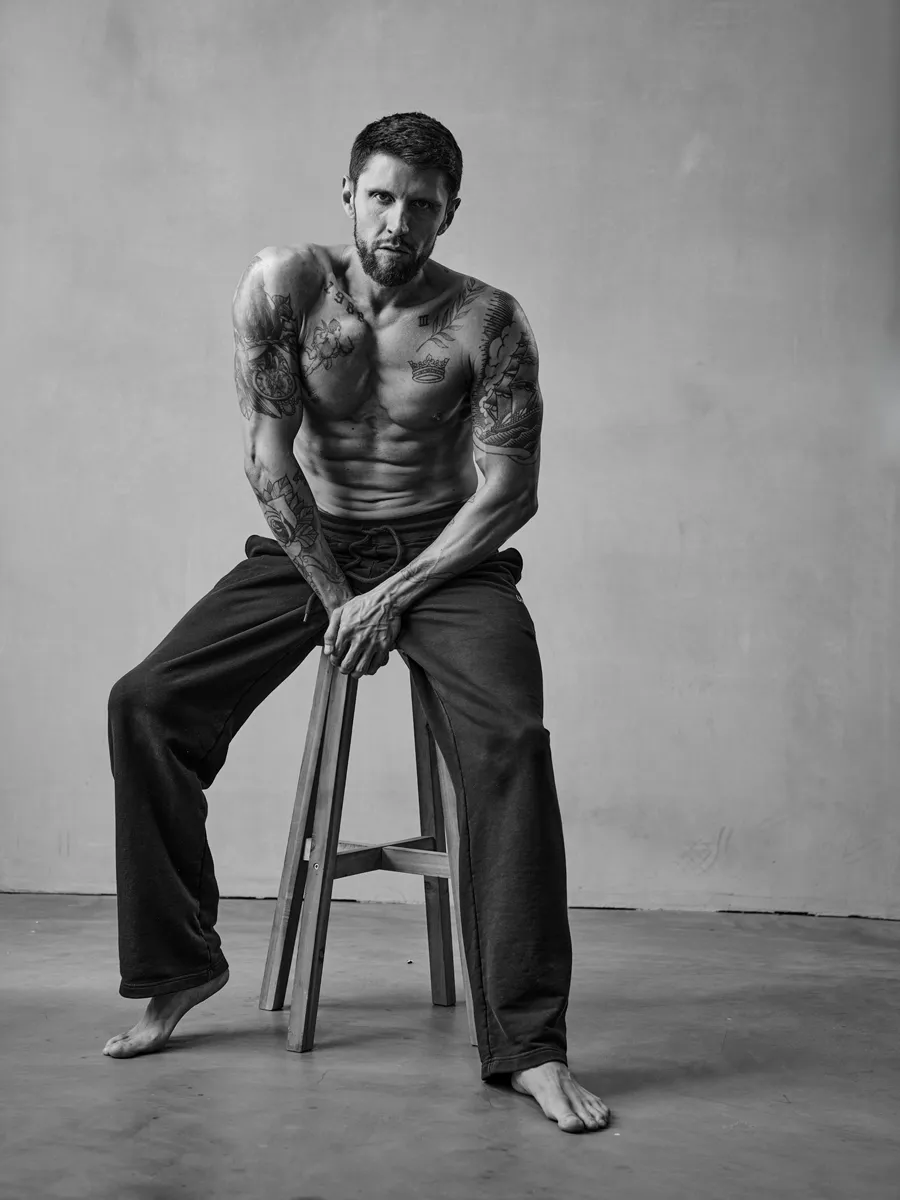
Black and white fitness photography strips away colour and forces the viewer to focus on what matters most: shape, shadow, and muscle detail. When it works, it works harder than any colour image. After 18 years of shooting athletes for publications like Muscle & Fitness and FLEX, I've come to see monochrome not as a stylistic shortcut but as a deliberate technical choice that rewards the right subject in the right light.
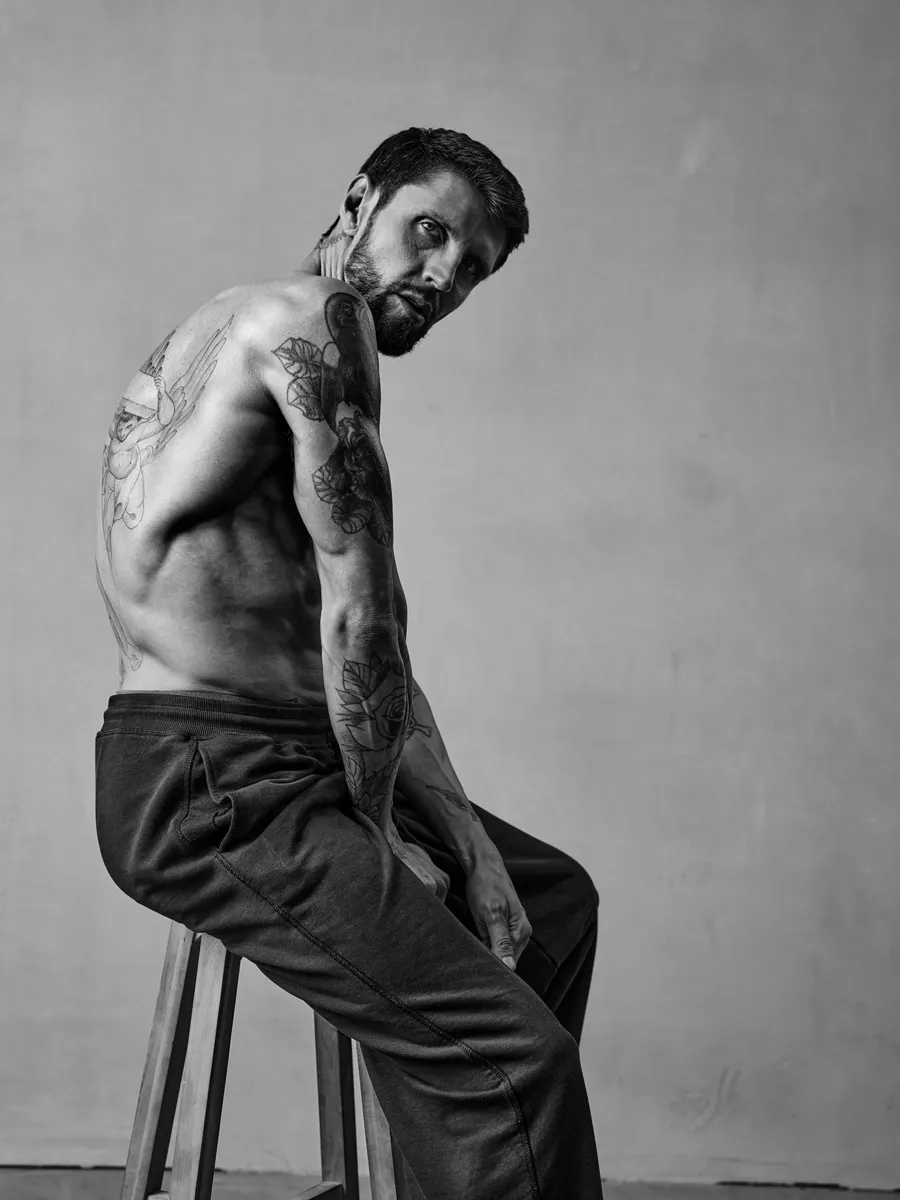
Why Black and White Works So Well for Physique Photography
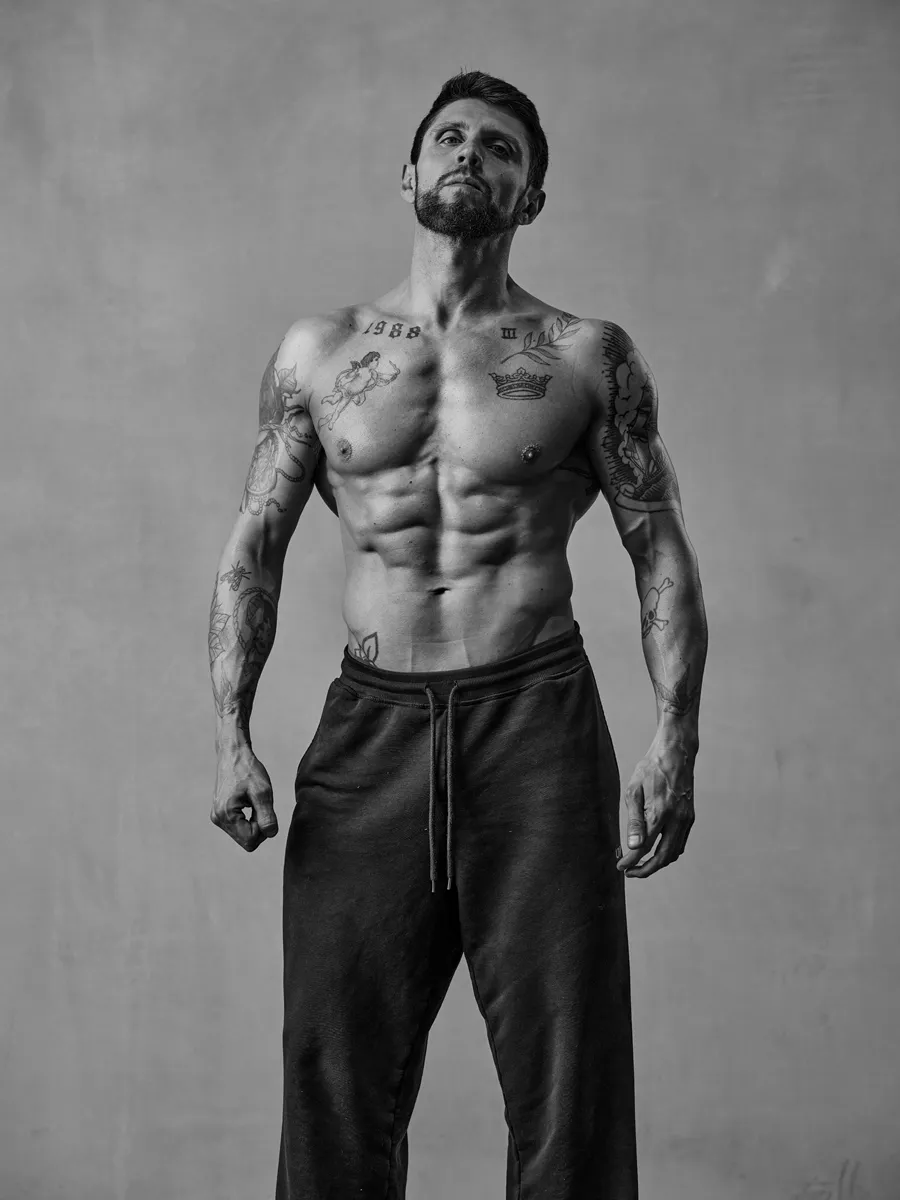
Colour is a distraction. Not always, but often. When you remove it, the eye goes straight to contour, texture, and depth. In fitness photography specifically, that means muscle separation reads more clearly. The striations across a quad, the cross-hatching of obliques, the ridge of a deltoid against the background - all of these become more prominent when there's no competing hue pulling attention sideways.
There's also a psychological dimension to it. Black and white images tend to feel more serious, more timeless. A colour image can date itself within a decade through its palette choices. A well-lit monochrome image of a physique holds up. Some of the most reproduced bodybuilding images ever taken were shot in black and white, and they still look sharp decades later because the quality was in the light, not the filter.
That said, monochrome isn't a fix for poor lighting or a weak pose. If anything, it's less forgiving. Every flaw in the illumination is exposed. This is why understanding when to reach for it, and when to leave it in the bag, matters enormously.
The Lighting Techniques That Make Monochrome Muscles Pop
Lighting for black and white fitness photography is a different discipline to lighting for colour. In colour work, you can use tonal contrast between skin and background, or costume colour, to create separation. In monochrome, you only have light and shadow. That means the lighting has to do more of the heavy lifting.
Hard Light and Directional Sources
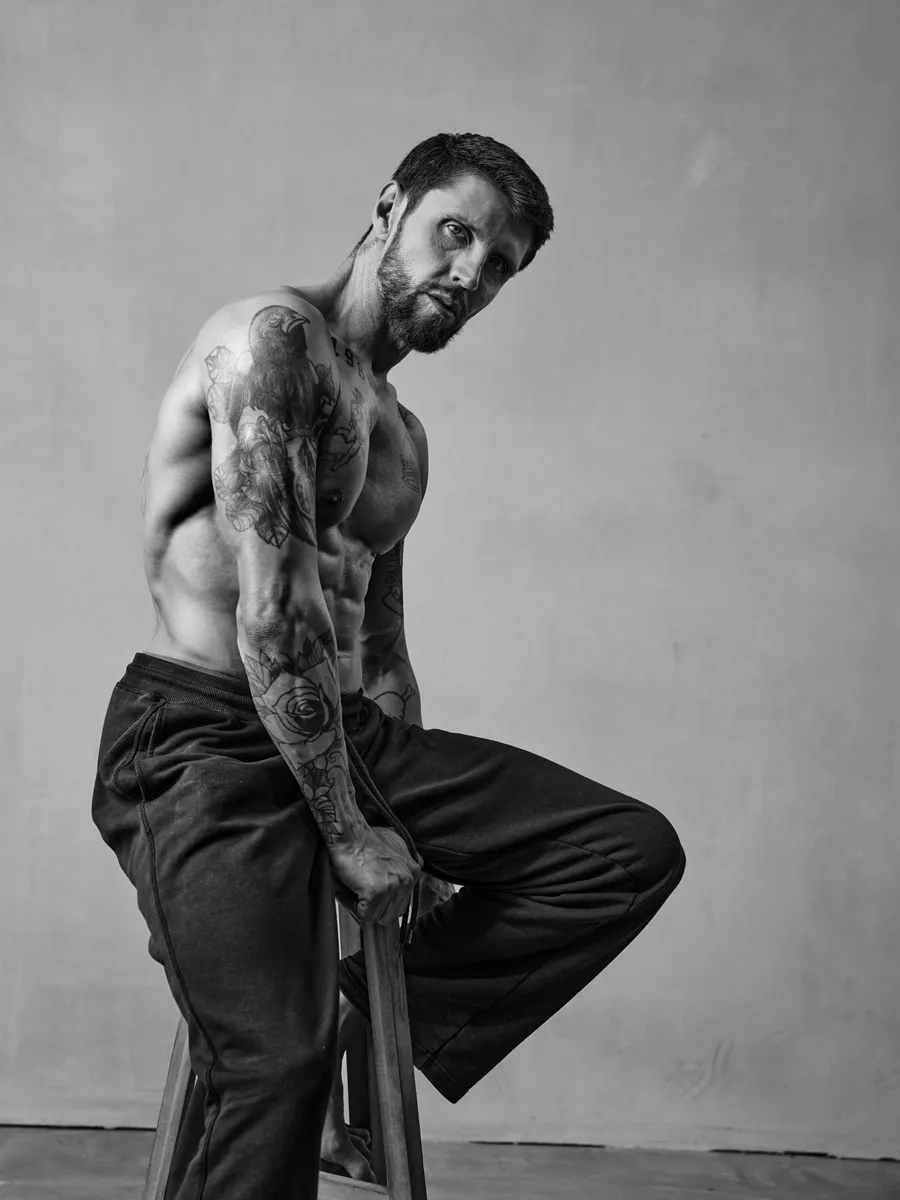
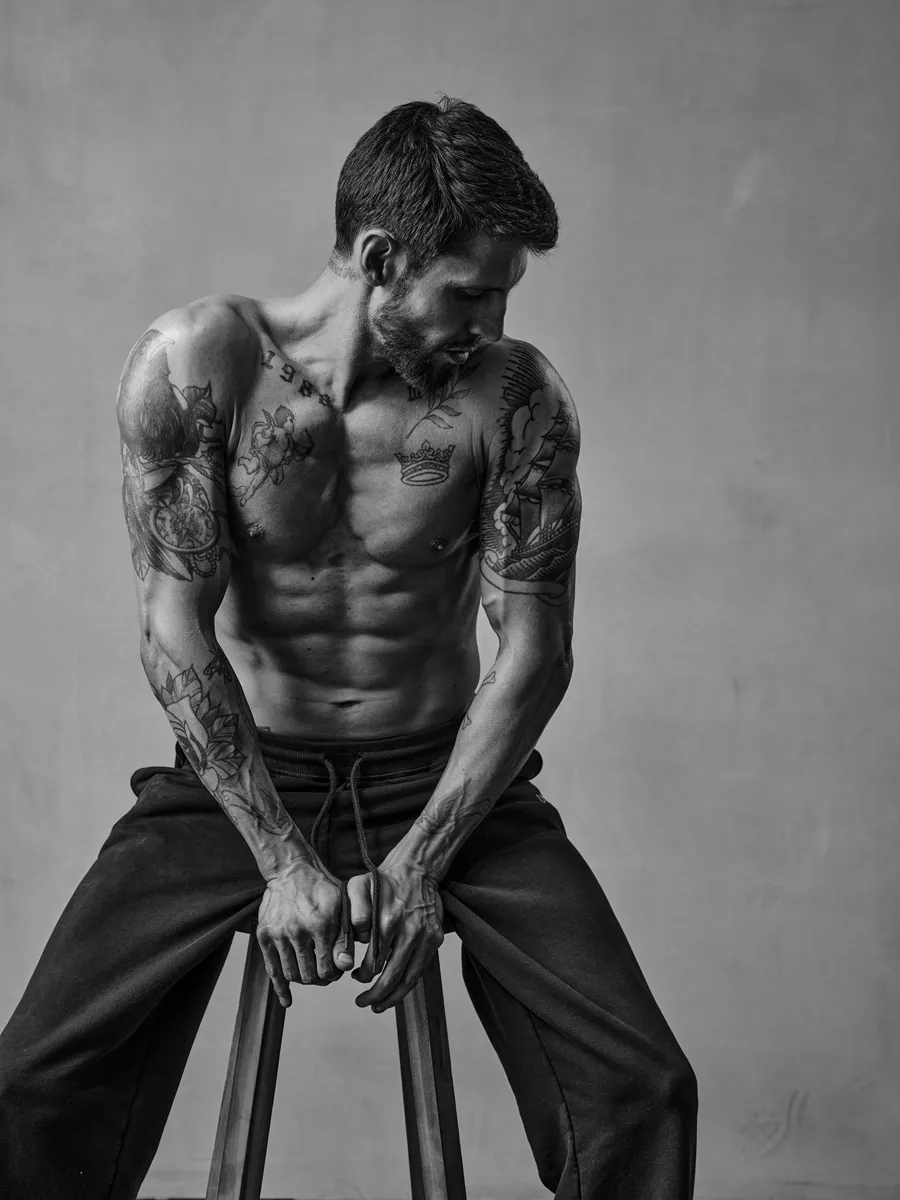
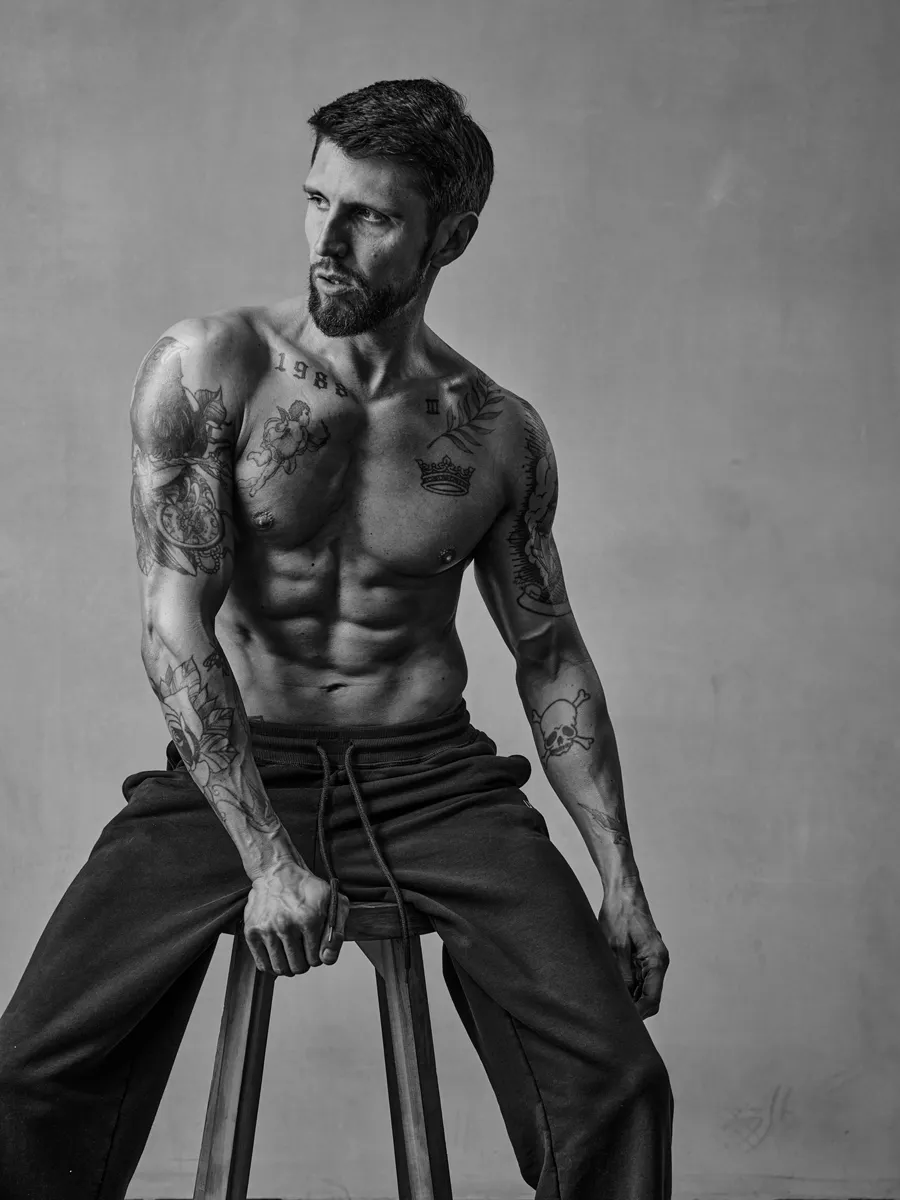
I almost always reach for harder light sources when I know an image is going to convert to black and white. A large softbox will wrap beautifully around a face but it can kill muscle detail by filling in the shadows that define separation. A smaller source, or a gridded modifier, placed at roughly 45 degrees to the subject, throws those shadows sideways. That's where the drama lives. The light catches the peak of a bicep and drops off sharply into the valley beside it. In monochrome, that contrast is everything.
I'll typically use a single key light with a reflector on the opposite side rather than a full fill light. A fill that's too bright closes up the shadow and flattens the image. Keeping the fill roughly two stops under the key gives you depth without losing detail in the darkest areas of the body.
Background Separation in Monochrome
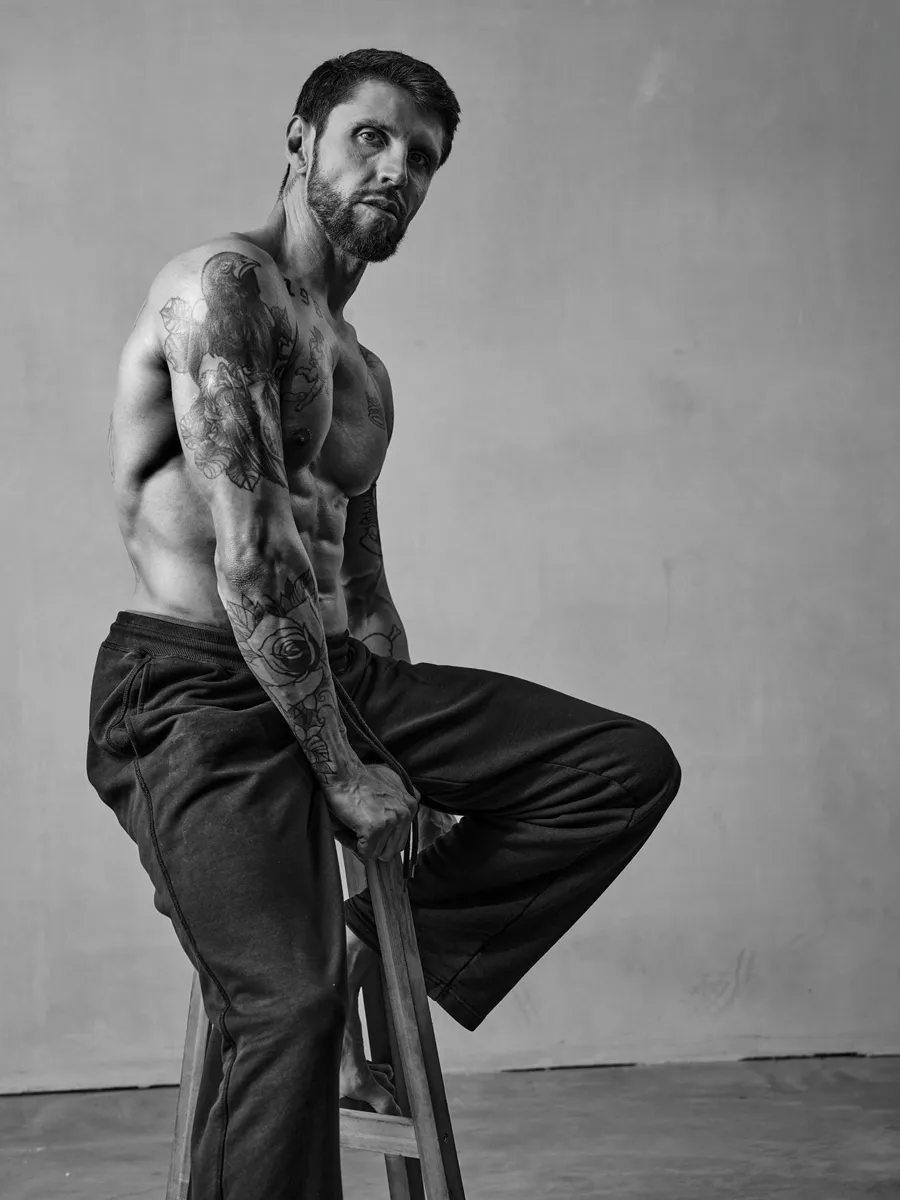
When colour is removed, tonal separation between the subject and background becomes critical. A pale background with a pale subject reads as a muddy blob. You either light the background separately to push it darker or lighter than the skin, or you choose a background with a clearly different tonal value to begin with. At my studio in Nottingham, I keep a range of backgrounds specifically for this reason. A dark grey seamless with a subject lit brightly from the side gives you a natural vignette effect in black and white. A bright white background with rim lighting creates a graphic, high-contrast look. Both are strong. Neither happens by accident.
Rim and Hair Lighting
Edge lighting becomes particularly important in black and white fitness photography. Without colour to separate the subject from the background, a rim light traces the outline of the physique and lifts the image from flat to three-dimensional. I often use a strip box positioned directly behind and slightly above the athlete, angled toward the camera. The rim of light that catches the shoulder, the side of the torso, and sometimes the leg gives the image a sculptural quality that colour work rarely achieves as cleanly.
Choosing the Right Athlete and Physique for Monochrome
Not every physique translates equally well to black and white. In colour, a stage-ready competitor with deep conditioning will look impressive regardless of the lighting approach. In monochrome, the image lives or dies on the depth and definition of the muscle bellies and the quality of the skin texture.
Athletes who are well conditioned and have good muscle separation tend to produce the strongest black and white images. The cross-striated look of a dry, stage-ready physique under hard directional light in monochrome is one of the most striking things I shoot. I've produced some of my favourite images this way at the Arnold Classic and Mr Olympia competitions, where athletes are at peak conditioning and the lighting drama available in competition settings lends itself naturally to conversion.
That doesn't mean softer physiques can't work. It means the lighting approach has to shift. I'll use a slightly larger source, a more flattering angle, and I'll be selective about which images get converted. Not every frame from a shoot needs to go to black and white. Shooting in colour and converting in post gives you the flexibility to choose the frames where monochrome genuinely adds something.
The Shooting and Post-Processing Workflow for Black and White Fitness Images
I always shoot in RAW and in colour. Some photographers shoot with a black and white picture profile in-camera, which can help you visualise the final image, but it limits your options in post. Shooting colour RAW and converting gives you full control over how each individual colour channel maps to grey in the final image.
Channel Mixing for Skin and Muscle
The most powerful tool in monochrome conversion is the colour channel mixer. Skin tones are predominantly in the red and orange channels. By brightening those channels in the black and white conversion, you can lift the skin tones relative to the background without touching overall exposure. This creates a natural glow to the physique and can enhance the appearance of conditioning. Dropping the green channel slightly can deepen the shadows in the background, giving you more contrast without clipping highlights on the body.
I spend significant time with the channel mixer on every monochrome conversion. Two images shot under identical lighting can look completely different based on how the channels are balanced. This is the stage where technical knowledge pays off in a visible way, and it's one of the reasons that preparing properly for a fitness photoshoot matters so much. The better the athlete's conditioning and skin preparation, the more latitude I have in post.
Contrast, Dodging and Burning
Once the channel mix is set, I work through contrast in curves rather than using a simple contrast slider. Curves let me brighten the mid-tones where muscle bellies sit without blowing the highlights on the skin. I then dodge and burn selectively, adding depth to shadow areas that may have filled in and brightening the peaks of muscle groups that the key light kissed. Done carefully, this is invisible to the viewer but adds a level of dimensionality that straight conversion rarely achieves.
The whole process typically adds 20 to 30 minutes per selected image on top of standard retouching. It's not a quick filter. If you want black and white fitness photography that genuinely stands apart, the processing time is part of what you're paying for when you view our photography packages and pricing.
When Colour Is the Better Choice
Black and white isn't always the answer, and I'd rather be honest about that than push every shoot toward monochrome for the aesthetic. Colour works better when the costume, branding, or product is central to the image. If an athlete is promoting a supplement with a bold-coloured label, or a sportswear brand has specific colour-matching requirements, stripping that out defeats the purpose.
Colour also tends to perform better on social media platforms where feeds move fast and a vibrant image stops the scroll more readily than a monochrome one. That's a practical consideration, not a creative one, but it matters for clients whose primary output is digital content. For editorial, fine art prints, and portfolio work, black and white holds its own comfortably.
The honest answer is that the best shoots produce a mix of both. Some frames call for monochrome. Others earn their colour. If you're planning a session and wondering which approach fits your goals, get in touch and we can talk through the options before we even step foot in the studio.
Getting the Most from a Black and White Fitness Photoshoot
If you're planning a session with monochrome in mind, there are practical steps you can take before you arrive that will make a real difference. Skin preparation matters more than in colour work because texture is front and centre in the final image. Dry, well-prepared skin catches light cleanly. Over-moisturised skin can look flat. Choosing the right outfit for a fitness photoshoot also shifts slightly for monochrome. Bold colours are irrelevant, but tonal contrast with the background matters. Dark shorts against a white background or white shorts against a dark background both give clean separation.
Conditioning timing matters too. If you're planning a session around peak conditioning, give me a heads-up so we can schedule the session at the right point in your prep cycle. I've shot enough athletes to know that a day or two either side of peak can make a meaningful difference to how an image reads, and in black and white, that difference is amplified.
Our 8,000 sq ft studio in Nottingham is set up to handle the full range of lighting configurations I've described here, from soft editorial setups to hard directional rigs built specifically for monochrome physique work. If you're coming from outside the Midlands, you can also find out more about working with me as a fitness photographer in Birmingham or across other UK locations.
Frequently Asked Questions
Is black and white better than colour for fitness photography?
Neither is universally better. Black and white tends to emphasise muscle detail, texture, and contrast more effectively, making it a strong choice for physique-focused work. Colour performs better when branding, costume, or product is central to the image. The best approach depends on the purpose of the shoot and the specific frames you're selecting during editing.
Do I need to be competition-ready for black and white fitness photos to look good?
You don't need to be on stage the next day, but conditioning does show more clearly in monochrome than in colour. The lighting and post-processing approach shifts depending on where the athlete is in their prep. I work with athletes at all stages and adjust the lighting to suit, but if you're planning a session specifically for physique shots, the closer to peak you are, the more the images will reward the detail work in post.
What lighting is used for black and white fitness photography?
Harder, more directional light sources work best. I typically use a gridded key light at 45 degrees, a controlled fill two stops under, and often a rim light to separate the physique from the background. The goal is to create depth through shadow rather than relying on colour contrast. This is a different setup to standard colour fitness photography and requires a studio environment to execute properly.
Can black and white fitness photos be used for commercial work?
Yes, and they're often used in editorial, supplement advertising, and personal branding contexts where a premium, timeless feel is the goal. They're less common in product-led campaigns where colour matching is important. For personal portfolio work, social media branding, and magazine submissions, black and white images can be highly effective.
How do photographers convert fitness photos to black and white properly?
The best results come from shooting in RAW, then converting in post using a colour channel mixer rather than a simple desaturation filter. Adjusting the red and orange channels brightens skin tones, while selective dodging and burning adds depth to muscle groups. A flat desaturation takes ten seconds. A proper monochrome conversion with channel mixing and tonal work takes 20 to 30 minutes per image and produces a completely different result.
If you're thinking about a black and white fitness photoshoot and want to know how we'd approach it for your goals, reach out through the contact page and we'll have a conversation before any booking is made. I'd rather spend ten minutes talking through the right approach than have you arrive on the day with expectations we haven't planned for.
Written by
Christopher Bailey
Fitness photographer with 18+ years behind the camera. Official photographer for Muscle & Fitness and FLEX Magazine.
Related Services
Professional Fitness Photoshoot
Private gym studio, full direction, gallery to choose from within 48 hours.
How to Prepare for a Fitness Photoshoot
Skin, grooming, tanning and what to bring on the day.
Your First Fitness Photoshoot
No experience needed. Full direction from start to finish in a private studio.